Correction is its own discipline.
Whether the concern is a complication, a result that has changed over time, or an outcome that never matched your expectations — revision surgery is technically more demanding than a first-time augmentation. Dr. Larry Nichter brings the judgment of a Board Examiner for the American Board of Plastic Surgery and decades of experience with the full range of revision cases.
Request a Private Consultation
The procedure
Breast Augmentation Revision in Newport Beach
Breast augmentation revision is a surgical procedure that corrects or improves the results of a previous breast augmentation. It may involve replacing implants, changing their size or type, repositioning them, removing them entirely, or addressing complications that have developed over time.
Patients seek revision for many reasons. Some are dissatisfied with the size, shape, or feel of their current implants. Others are dealing with a medical complication — capsular contracture, implant rupture, rippling, or malposition. And some simply want to update implants that have aged or no longer match their body after pregnancy, weight change, or the passage of time. What these patients share is a common experience: something about their augmentation is not right, and they want it corrected.
Revision surgery is technically more demanding than a first-time augmentation. The surgeon is working with altered tissue, scar tissue from the prior procedure, and anatomy that has already been modified. The margin for error is narrower. This is precisely where a surgeon's depth of experience makes the greatest difference.
His approach
The Judgment That Revision Requires
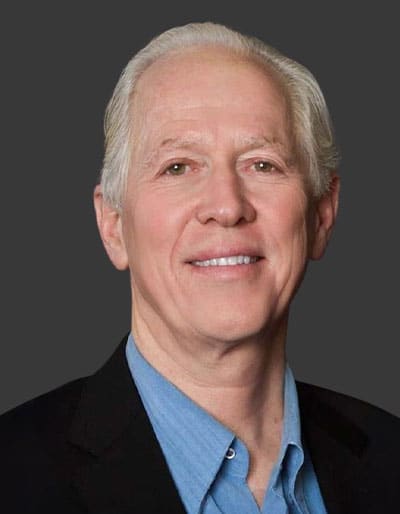
Patients come to revision surgery for different reasons — a complication, implants that have changed with time, or a result that was never quite right. What they share is the need for a surgeon whose experience with secondary procedures matches the complexity of the work.
Revision surgery demands more of a surgeon than primary augmentation. The tissue has been modified. Scar tissue (the capsule) must be managed — sometimes removed entirely (capsulectomy), sometimes reshaped. The implant pocket may need to be rebuilt, repositioned, or created in a new plane. When the original technique contributed to the problem, the revision must not only correct the issue but prevent its recurrence.
Dr. Nichter evaluates each revision individually. He identifies the specific cause — whether it is implant selection, pocket position, capsular contracture, tissue thinning, or a combination — and builds the surgical plan around correcting that cause, not just its visible effect. As a Board Examiner for the American Board of Plastic Surgery, he holds other surgeons to the highest technical standard. His own revision work reflects that same standard: precise diagnosis, honest assessment of what can be achieved, and a plan designed for a lasting correction.
Is it right for you
Am I a Good Candidate for Breast Augmentation Revision?
You may be a candidate for revision if you are experiencing any of the following after a prior breast augmentation:
- Dissatisfaction with size or shape — Your implants are too large, too small, or no longer match your body after life changes
- Capsular contracture — Scar tissue has hardened around the implant, causing firmness, distortion, or discomfort
- Implant malposition — The implants have shifted, dropped, or moved too close together
- Rippling or wrinkling — Visible implant edges, usually from insufficient tissue coverage
- Implant rupture or deflation — A silicone rupture (often detected by imaging) or saline deflation (visible as volume loss)
- Asymmetry — Uneven results from the original surgery, or asymmetry that has developed over time
- Implant aging — You want to update implants that have been in place for many years
Good candidates are in overall good health and have realistic expectations about what revision can achieve. It is important to understand that revision is corrective surgery — it improves the situation, but outcomes depend on the starting point, including the condition of the tissue from the prior procedure.
If your goal is implant removal without replacement, Dr. Nichter also performs breast implant removal (explant) as a standalone procedure.
What to expect
Your Breast Augmentation Revision Experience
Consultation and Planning
This consultation is more involved than a primary augmentation consultation. Dr. Nichter examines your current implants, assesses the condition of your breast tissue and capsule, reviews imaging if available, and discusses what specifically concerns you. He explains what caused the issue, what the revision will involve, and what the realistic expected outcome is. If you had surgery elsewhere, he will not criticize your prior surgeon — he will focus on what can be done now.
How Revision Is Performed
Breast augmentation revision is performed under general anesthesia. The procedure typically takes one to three hours, depending on complexity.
When possible, Dr. Nichter uses existing incision scars to avoid creating new ones. Through the incision, he may:
- Remove and replace the implants (same or different type, size, or profile)
- Perform a capsulectomy — removing the scar tissue capsule, either partially or entirely
- Rebuild or reposition the implant pocket (converting from above the muscle to below it, or vice versa)
- Repair the internal pocket to correct bottoming out, lateral displacement, or symmastia
- Add fat grafting to improve tissue coverage over the implant, reducing rippling
- Combine the revision with a breast lift if sagging has developed
Each revision is unique. The surgical plan depends entirely on what needs to be corrected and what the tissue can support.
Immediately After
You are monitored as anesthesia clears and typically go home the same day. You will wear a supportive surgical bra or compression garment. Recovery instructions are tailored to the specifics of your revision.
Recovery
Recovery and Downtime
Recovery from revision surgery is similar to — and sometimes slightly longer than — recovery from primary augmentation, depending on the extent of the work performed.
The First Few Days
Expect soreness, tightness, and swelling. If a capsulectomy was performed, discomfort may be more pronounced than after a first-time augmentation. Prescription medication manages pain. Keep your upper body slightly elevated when resting. Avoid raising your arms overhead or lifting anything heavier than a few pounds.
Week One
Bruising begins to fade. Swelling remains. Most patients manage daily activities by the end of the first week but should continue to take it easy. Wear your surgical bra continuously. Walking is encouraged.
Weeks Two Through Four
Most patients return to desk work within one to two weeks. Swelling continues to diminish. The breasts gradually settle into their corrected position. Avoid exercise, heavy lifting, and upper-body activity.
Six Weeks and Beyond
By six weeks, most restrictions are lifted. Exercise resumes gradually. Internal healing and tissue softening continue for several months. Final results — with the implants fully settled and swelling completely resolved — typically emerge at three to six months, with the full outcome visible by one year.
Results
Corrected, natural, lasting.
Revision results develop more gradually than primary augmentation results. The tissue has been operated on before, and it takes longer for swelling to resolve and for implants to settle into their corrected position. Initial improvement is visible within weeks, but the final shape, symmetry, and softness typically emerge over six to twelve months.
When the underlying cause of the problem has been correctly identified and addressed, revision results are lasting. Dr. Nichter's focus on diagnosing the root cause — not just replacing the implant — is what prevents the same issue from recurring.
This 36 year old patient is 5'5 and weighs 150 pounds. She had a previous breast augmentation 457cc implants. She was a C cup before her revision surgery. Dr. Nichter replaced her old implants with 770cc Allergan SRF high profile Natrelle Inspira silicone implants. The incision was placed in her lower breast crease. She is now a 34D.
This 43-year-old woman had a Breast Implant Revision and Capsulectomy to treat capsular contracture on the right breast.
This 34-year-old woman had a Breast Implant Revision. The right inferior mammary fold was lowered for symmetry.
This 52-year-old woman had a Breast Implant Exchange, Revision and Capsulectomy to treat capsular contracture on the right breast.
Investment
Cost and Financing
Revision surgery is typically more involved than a first-time augmentation, and the cost reflects that complexity. Factors that affect pricing include the extent of the correction, whether a capsulectomy is required, the type of implants selected, anesthesia time, and whether additional procedures such as a breast lift are included. A detailed quote is provided after consultation.
Financing options are available — please ask at your consultation.
Common questions
Frequently Asked Questions
How is revision different from the original augmentation?
Revision is more complex because the surgeon is working with tissue that has already been modified. There is scar tissue to manage, the implant pocket may need to be rebuilt, and the tissue may be thinner or less elastic than it was originally. This is why choosing a surgeon with significant revision experience matters more than it does for a first-time augmentation.
Can you fix capsular contracture?
Yes. Capsular contracture — where scar tissue hardens around the implant — is one of the most common reasons for revision. Dr. Nichter typically performs a capsulectomy (removing the thickened capsule) and may change the implant pocket, implant type, or placement technique to reduce the risk of recurrence.
Can I change my implant size during revision?
Yes. Many patients choose a different size, profile, or implant type during revision. Dr. Nichter will assess how your tissue has changed since the original surgery and recommend options that will achieve a proportional, natural-looking result with your current anatomy.
What if I want my implants removed entirely?
Dr. Nichter performs breast implant removal (explant) as a standalone procedure. Depending on your anatomy and goals, he may also recommend a breast lift or fat transfer to restore breast shape after removal.
Will you use the same incisions?
Whenever possible, yes. Using the existing scars avoids creating new ones. However, if the correction requires a different access point — or if a breast lift is being performed simultaneously — additional incisions may be necessary. Dr. Nichter will explain this during consultation.
How long does revision surgery take?
One to three hours, depending on the complexity. A straightforward implant exchange is shorter; a revision involving capsulectomy, pocket reconstruction, and a lift takes longer.
Will my results look natural after revision?
This is the central goal. Many patients seeking revision are specifically concerned about an unnatural appearance from their first surgery — too round, too high, too firm, or visibly augmented. Dr. Nichter's approach to revision focuses on correcting these issues and producing a result that looks and feels natural.
Schedule Your Consultation
If a previous augmentation has left you with results you are not satisfied with — or a complication that needs correction — Dr. Nichter can help. A revision consultation is thorough: he will examine your current situation, explain what went wrong and why, and discuss what can realistically be achieved. Many patients tell him they wish they had come sooner. There is no obligation.
Request a Private ConsultationDr. Nichter sees patients from across the United States and internationally. The office is located in Newport Beach, CA.