Your body. Your proportions. Your decision.
Breast augmentation is one of the most personal decisions in cosmetic surgery. Dr. Larry Nichter approaches it that way — selecting implant type, size, shape, and placement based on your anatomy and your goals, not a standard formula.
Request a Private Consultation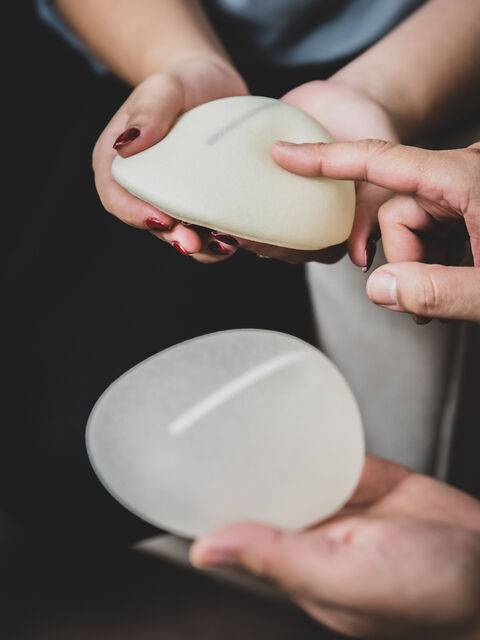
The procedure
Breast Augmentation in Newport Beach
Breast augmentation is a surgical procedure that enhances the size, shape, and symmetry of the breasts using implants or fat transfer. It is one of the most commonly performed cosmetic surgeries in the United States, and one of the most customizable — with decisions about implant material, shape, profile, volume, and placement all tailored to the individual patient.
Women seek breast augmentation for a range of reasons: to restore volume lost after pregnancy or weight change, to improve naturally asymmetric breasts, to achieve proportions that better match their frame, or simply because they have wanted fuller breasts for years. The motivation is personal, and the surgical plan should be equally so.
Dr. Nichter offers both implant-based augmentation and fat transfer augmentation, including his California Breast Lift® — a proprietary technique that uses the patient's own fat to add subtle volume and lift without implants. The right approach depends on your anatomy, your goals, and the degree of enhancement you want.
His approach
Precision That Begins With Proportion
Breast augmentation is not a matter of choosing a cup size from a catalog. The result depends on the relationship between implant dimensions and the patient's chest width, tissue thickness, breast base diameter, and body frame. Dr. Nichter's approach starts with these measurements — not with a number.
He selects implant type (silicone or saline), shape (round or anatomical), profile (the degree of forward projection), and volume based on the patient's specific anatomy. Two patients who want "the same size" will often require different implants to achieve proportional, natural-looking results. This is the kind of judgment that comes from performing breast augmentation across thousands of patients and understanding what works long-term — not just on the operating table, but years later.
Placement is equally individualized. Dr. Nichter determines whether the implant should sit beneath the chest muscle (submuscular), partially beneath it (dual plane), or above it (subglandular) based on the patient's tissue coverage and body type. He places incisions where they will heal most discreetly — typically in the breast crease (inframammary) or along the areola border (periareolar) — and recommends the approach that best serves the result.
For patients who prefer augmentation without implants, Dr. Nichter's California Breast Lift® uses fat harvested through liposuction to add modest volume and improve breast shape. This technique is best suited for patients seeking subtle enhancement — typically one cup size or less — with the added benefit of contouring the donor site.
Is it right for you
Am I a Good Candidate for Breast Augmentation?
Breast augmentation is appropriate for healthy adults who want to increase breast volume, improve symmetry, or restore fullness lost to pregnancy, breastfeeding, aging, or weight change. The best candidates have clear goals and realistic expectations about what augmentation can accomplish.
You may be a good candidate if:
- You are dissatisfied with your breast size or shape and have considered augmentation for some time
- You want to restore volume lost after pregnancy, breastfeeding, or weight loss
- Your breasts are noticeably asymmetric and you want improved balance
- You are in good general health without conditions that impair healing
- You are not currently pregnant or breastfeeding
- You are a non-smoker and do not use other forms of nicotine, or are willing to stop well in advance of surgery
Breast augmentation is not appropriate for patients with unrealistic expectations about the degree of change implants can provide, or for patients who are not yet at a stable weight. If you are planning a pregnancy, Dr. Nichter may recommend waiting — pregnancy and breastfeeding can change breast shape and may affect results.
A consultation is the best way to determine whether augmentation, fat transfer, or a combination approach is right for you.
What to expect
Your Breast Augmentation Experience
Consultation and Planning
Dr. Nichter examines your breast anatomy — tissue thickness, chest width, skin elasticity, existing asymmetry — and discusses your goals in detail. He explains which implant options best suit your frame, reviews incision placement, and ensures you understand the expected outcome, the trade-offs of different approaches, and the limitations of the procedure. You leave with a specific surgical plan.
The Day of Surgery
Breast augmentation is performed under general anesthesia and typically takes one to two hours. Dr. Nichter makes an incision — most commonly in the breast crease (inframammary) or along the lower border of the areola (periareolar) — and creates a pocket for the implant, either beneath or partially beneath the chest muscle, depending on your anatomy and the surgical plan.
The implant is placed, positioning is confirmed for symmetry and proportion, and the incision is closed with layered sutures designed to minimize scarring. If augmentation is being combined with a breast lift or as part of a mommy makeover, those procedures are performed in the same session.
Immediately After
You are monitored as anesthesia clears and typically go home the same day. You will wear a supportive surgical bra or compression garment. Someone must drive you home and stay with you for the first twenty-four hours. You leave with detailed post-operative instructions and direct access to the office for questions.
Recovery
Recovery and Downtime
Breast augmentation recovery is generally straightforward, though the timeline varies depending on implant placement and whether the procedure was combined with other surgeries.
The First Few Days
Expect tightness, pressure, and soreness in the chest — particularly if implants are placed beneath the muscle. Swelling is normal. Prescription medication manages discomfort during this period. Keep your upper body slightly elevated when resting. Avoid raising your arms above your shoulders or lifting anything heavier than a few pounds.
Week One
Bruising, if present, begins to fade. Soreness transitions from sharp to dull. Most patients can manage daily activities by the end of the first week, though you will still feel restricted. Wear your surgical bra as directed. Walking is encouraged. Avoid driving until you are off prescription pain medication.
Weeks Two Through Four
Most patients return to desk work within one to two weeks. Swelling continues to diminish. The breasts will sit higher than their final position initially — this is normal. They settle gradually over the coming weeks. Avoid upper-body exercise, heavy lifting, and high-impact activity.
Six Weeks and Beyond
By six weeks, most activity restrictions are lifted. Exercise can resume gradually, starting with lower body and building to upper-body workouts as comfort allows. Implants continue to settle into their final position over three to six months. Incision scars fade progressively over six to twelve months.
Results
Natural, lasting improvement.
Initial improvement is visible within days as swelling subsides, but the final shape and position of the breasts take time to emerge. Implants typically sit higher immediately after surgery and settle into a more natural position over three to six months — a process sometimes called "dropping and fluffing."
Once settled, breast augmentation results are long-lasting. Modern silicone and saline implants are durable, though they are not considered lifetime devices. Periodic monitoring is recommended, and implant replacement may be warranted at some point — typically after ten to fifteen years, depending on how the implants age and whether any changes develop. Many patients go significantly longer without issues.
Factors that affect the appearance of results over time include pregnancy, breastfeeding, weight fluctuation, and natural aging. Maintaining a stable weight helps preserve the outcome.
This mom of 2 had breast augmentation using Ideal Implant 405 cc's placed under the muscle through inframammary incisions.
Patient wanted conservative volume enhancement so it was decided that 210 cc Ideal® saline implants would be used. They were placed under the muscle through an inframammary incision. She is very pleased with the shape and size of her breasts following surgery.
This 37 year old patient was a size 32A before having surgery. After breast augmentation she is now a 34C. Dr. Nichter used 335 cc Sientra silicone high profile implants. They were placed under the muscle through an inframammary incision.
This 27 year old was 5'3 and 120 pounds with a 32A cup size at the time of surgery. She was unhappy with the size of her breasts so she chose the doctor to perform her breast augmentation. He used Ideal Implants filled to 250 cc's on both sides using an inframammary incision and sub-muscular placement.
Galleries: Breast Augmentation 83Breast Implants 81Ideal Implant 28Sientra Breast Implants 13Inspira Breast Implants 4Natrelle Breast Implants 2Mentor Breast Implants 2
Investment
Cost and Financing
The cost of breast augmentation depends on the type of implants selected, the surgical technique, anesthesia, facility fees, and whether the procedure is combined with other surgeries such as a breast lift. A detailed, transparent quote is provided after consultation, once Dr. Nichter has examined your anatomy and discussed your goals.
Financing options are available — please ask at your consultation.
Common questions
Frequently Asked Questions
What is the difference between silicone and saline implants?
Silicone implants are filled with a cohesive gel that closely mimics the feel of natural breast tissue. Saline implants are filled with sterile saltwater after placement, allowing for minor volume adjustments during surgery. Both are FDA-approved and safe. Dr. Nichter recommends the type that best suits your tissue thickness, body frame, and aesthetic goals.
Where will the incisions be?
The most common incision locations are in the breast crease (inframammary) and along the lower border of the areola (periareolar). Both heal discreetly. Dr. Nichter recommends the placement that provides the best access for your chosen implant type and minimizes visible scarring.
Will my breast augmentation look natural?
This is the most common concern — and the most important one to get right. Natural-looking results depend on selecting the correct implant dimensions for your frame, choosing the right profile and placement, and exercising restraint. Dr. Nichter sizes implants to your anatomy and frame. The goal is breasts that look proportional and feel like yours.
How long do breast implants last?
Modern implants are durable but not considered lifetime devices. Many patients go ten to fifteen years or longer without any issues. Dr. Nichter recommends periodic monitoring and will advise you if replacement becomes warranted. There is no fixed expiration date — replacement is based on how the implants are performing, not a calendar.
Can breast augmentation be combined with a breast lift?
Yes, and this is one of the most common combinations. If your breasts have both lost volume and begun to sag, augmentation alone may not achieve the result you want. A breast lift reshapes and raises the breast, while augmentation restores volume. Dr. Nichter performs both in a single session when appropriate.
Will I be able to breastfeed after augmentation?
Most patients retain the ability to breastfeed after augmentation, particularly when the implant is placed beneath the muscle and the incision does not cross the milk ducts. However, this cannot be guaranteed. If breastfeeding is important to you, discuss this during your consultation.
What is fat transfer breast augmentation?
Fat transfer uses your own fat — harvested through liposuction — to add volume to the breasts without implants. Dr. Nichter's California Breast Lift® is a proprietary fat transfer technique that provides subtle enhancement, typically one cup size or less. It is best suited for patients who want modest volume with a natural feel and the added benefit of contouring the donor area.
How soon can I exercise after surgery?
Light walking is encouraged within the first few days. Most patients can return to lower-body exercise by three to four weeks. Upper-body workouts, heavy lifting, and high-impact activity should wait until six weeks, or until cleared by Dr. Nichter.
Schedule Your Consultation
Breast augmentation is a decision most patients consider for months or years before taking the first step. If you are at that point, Dr. Nichter welcomes the conversation. He will examine your anatomy, discuss your options — implants, fat transfer, or a combination — and assess what will best achieve your goals. There is no obligation.
Request a Private ConsultationDr. Nichter sees patients from across the United States and internationally. The office is located in Newport Beach, CA.