The structure beneath the surface.
A facelift is only as good as the work that happens underneath. Dr. Larry Nichter's approach addresses the deep tissue layers that shape how the face ages — producing results that look natural, hold up over time, and never announce themselves.
Request a Private Consultation
The procedure
Facelift in Newport Beach
A facelift — known medically as rhytidectomy — is a surgical procedure that lifts, tightens, and repositions the tissues of the face and neck to reverse the visible effects of aging. It addresses sagging skin, jowling, deep folds between the nose and mouth, and loss of definition along the jawline and neck.
Aging affects the face at every level: the skin loosens, the fat pads that give the face its youthful contour shift downward, and the deeper muscular and connective tissue layers weaken. A well-performed facelift corrects all three — not just the surface. That is what separates a result that looks natural and lasts from one that looks tight and fades quickly.
Modern facelift techniques have advanced considerably. The procedure is no longer a matter of pulling skin taut. Dr. Nichter's facelift work focuses on the structural foundation of the face, achieving results that his patients describe the same way: they look like themselves, only rested.
His approach
A Philosophy of Restraint
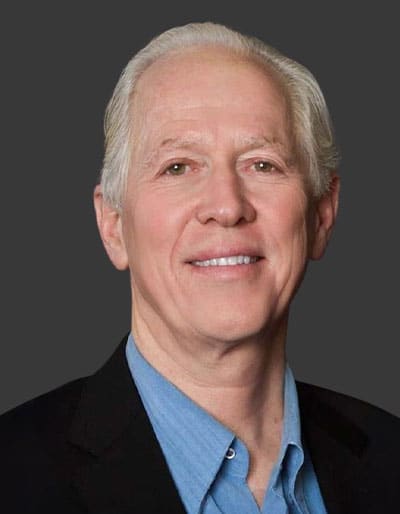
Every face ages differently. The surgical response should be equally individual. Dr. Nichter does not apply a single facelift technique to every patient — he assesses each face on its own terms, recommends only as much intervention as the anatomy requires, and prioritizes results that look natural over results that look operated on.
His method centers on the deep structural layers of the face: the SMAS (superficial musculoaponeurotic system), the underlying fat pads, and the muscular framework. Rather than relying on skin tension — which produces the tight, windswept appearance that most patients fear — he repositions these deep layers vertically, re-establishing the structural contour that aging has shifted. The skin is then redraped over a restored foundation, without excess tension. This is what produces results that hold up over time and continue to look natural years later.
For patients whose facial aging is moderate — early jowling, a softening jawline, good remaining skin elasticity — Dr. Nichter often recommends his LiteLift®, a proprietary minimal-scar facelift he co-developed and has refined over more than twenty years. The LiteLift® follows the same deep-structure principles in a less invasive format, with approximately 40% smaller incisions and a shorter recovery. For patients with more advanced aging, significant neck laxity, or heavy nasolabial folds, a comprehensive facelift provides the scope needed to achieve the best result.
As a Board Examiner for the American Board of Plastic Surgery, Dr. Nichter evaluates the surgical judgment of other surgeons. His own practice reflects the standard he sets.
Is it right for you
Am I a Good Candidate for a Facelift?
A facelift is appropriate for patients who are experiencing moderate to advanced facial aging and are in good overall health. Ideal candidates notice changes that non-surgical treatments can no longer adequately address — persistent jowling, deep nasolabial folds, loose skin along the jawline, or neck laxity that bothers them.
A facelift may be right for you if:
- You see sagging in the mid-face, jawline, or neck that creams and injectables no longer improve
- You want a lasting correction rather than temporary maintenance
- You are in good general health without medical conditions that would impair healing
- You have realistic expectations — you want to look refreshed, not different
- You are a non-smoker and do not use other forms of nicotine, or are willing to stop well in advance of surgery (smoking significantly impairs healing)
Patients in their forties through seventies most commonly seek facelifts, though candidacy depends on anatomy and health, not a number. For patients with milder aging and good skin elasticity, the LiteLift® may achieve comparable results with less recovery. Dr. Nichter will recommend the most appropriate approach during consultation.
What to expect
Your Facelift Experience
Consultation and Planning
Dr. Nichter examines your facial structure, skin quality, the degree of tissue laxity, and the specific areas that concern you. He explains which technique he recommends for your anatomy, discusses alternatives, and ensures you understand what the procedure can and cannot achieve. You leave with a detailed surgical plan.
The Day of Surgery
Facelifts are typically performed under general anesthesia, though IV sedation is available depending on the extent of the procedure. Surgery takes two to four hours — longer if combined with other procedures.
Dr. Nichter makes carefully placed incisions along the hairline and around the ears, designed to heal within natural creases and boundaries where they become difficult to detect. Through these incisions, he repositions the deep tissue layers — lifting the SMAS and fat pads, tightening the muscular framework — to restore structural contour. Excess skin is removed and the incisions are closed with precision sutures.
If your goals include the upper face or neck, a facelift can be combined with a brow lift, eyelid lift, or neck lift in a single session, allowing one recovery period rather than multiple.
Immediately After
You are monitored as the anesthesia clears. Most patients go home the same day. A friend or family member will need to drive you, and someone should stay with you for the first twenty-four hours. You leave with detailed post-operative instructions and direct access to the office for any questions.
Recovery
Recovery and Downtime
Facelift recovery requires patience, but each week brings visible progress.
The First Few Days
Swelling and bruising are at their peak. Expect discomfort — manageable with prescribed medication — and significant tightness in the face and neck. Keep your head elevated, even during sleep. Avoid bending over or lifting. A light dressing or compression garment may be worn to support healing and reduce swelling.
Week One
Bruising begins to shift and fade. Swelling remains noticeable. Sutures or staples are typically removed around day seven to ten. You will look and feel noticeably better than the first few days but are not yet ready to be seen socially. Avoid makeup, direct sun exposure, and any strenuous activity. Do not touch or pick at incision sites.
Weeks Two Through Four
Most patients feel comfortable returning to work and social activities by the end of week two, though some prefer to wait until week three. Bruising is largely resolved. Swelling continues to diminish gradually. Light activity — walking, gentle daily tasks — is encouraged. Avoid vigorous exercise, heavy lifting, and contact sports.
Six Weeks and Beyond
By six weeks, most activity restrictions are lifted. You can return to exercise, though listen to your body and ease back in. Internal healing continues for several months. The incisions continue to fade and soften over six to twelve months. Final results — with all swelling resolved and tissues fully settled — are typically visible at three to six months.
What helps: Follow post-operative instructions closely. Avoid smoking and alcohol during recovery. Protect your skin with sunscreen daily. Attend all follow-up appointments.
Results
Natural, lasting improvement.
Facelift results are both immediate and evolving. You will see a meaningful difference as soon as the initial bruising and swelling subside — typically by the second or third week. Final results emerge over three to six months as the deeper tissues settle into their new position and the incisions fully mature.
A well-performed facelift typically lasts ten years or longer. The procedure does not stop aging, but it resets the clock: patients generally look younger relative to their age for many years compared to if they had not had the surgery. Factors that influence longevity include skin quality, genetics, sun exposure, and lifestyle. Consistent skin care and sun protection extend the benefit.
Dr. Nichter's focus on deep structural repositioning — rather than relying on skin tension — is a significant factor in how long results last. Surface-level techniques tend to relax more quickly. Structural work provides a more durable foundation.
SMAS Facelift before and after
This 57 year old female patient of ours sought out the doctor for facial rejuvenation to combat the signs of aging. She was most concerned with skin laxity, fullness, and banding in the neck area. She also felt she looked older than her true age. Under local anesthesia, the doctor performed his signature MACS LiteLift® lower face and neck lift along with a platysmaplasty to further tighten the neck area. He also used liposuction to get rid of excess fat pockets.
This 68 year old patient underwent a LiteLift®, SMAS Facelfit, along with upper and lower eyelid surgery, blue peel, facial fat transfer and platysmaplasty. Through a hairline incision hidden within the ear, using local anesthesia, reduced the signs of aging around the jaw, neck, eyes, and lower face. He was also able to add volume to her face using her own fat for a natural and refreshed appearance.
This 79 year old patient underwent a LiteLift®, along with a platysmaplasty. She was unhappy with the lines and overall appearance of her face and neck. Through a hairline incision hidden within the ear, under local anesthesia, reduced the signs of aging around the jaw, neck, and lower face.
Galleries: SMAS Facelift 126Lower Facelift 119Facelift 60MACS Facelift 36Deep Plane Facelift 29Facelift Revision 1
Investment
Cost and Financing
Facelift cost depends on the specifics of each case: the extent of correction, the technique used, anesthesia, whether the procedure is combined with other treatments, and individual anatomical factors. A detailed, transparent quote is provided after consultation, once Dr. Nichter has examined you and discussed your surgical plan.
For patients whose anatomy is well suited to the LiteLift® — Dr. Nichter's less invasive alternative — the cost is typically lower, reflecting the shorter procedure time and reduced complexity.
Financing options are available — please ask at your consultation.
Common questions
Frequently Asked Questions
What is the difference between a facelift and a mini facelift?
A traditional facelift addresses the full face and neck through longer incisions, repositioning the deep tissue layers for comprehensive correction. A mini facelift — such as Dr. Nichter's LiteLift® — uses smaller incisions and is best suited for patients with moderate aging and good skin elasticity. During consultation, Dr. Nichter recommends the approach that best matches your anatomy and goals.
How long does a facelift take?
Two to four hours, depending on the extent of the procedure and whether it is combined with other treatments such as a neck lift, eyelid lift, or brow lift.
Will I look "done"?
This is the most common concern — and the most important one to address directly. Dr. Nichter's technique works on the deep structural layers beneath the skin rather than pulling the skin tight. This is specifically what prevents the pulled, windswept, or frozen appearance. His patients look refreshed and natural. That is not a marketing claim — it is a technical consequence of how the surgery is performed.
How long do I need to take off work?
Most patients return to work within two to three weeks, depending on the nature of their work and their comfort level. If your work involves physical exertion, plan for four weeks. Dr. Nichter provides personalized guidance based on how your recovery progresses.
How long do results last?
A well-performed facelift typically lasts ten years or longer. Deep structural techniques tend to produce more durable results than surface-level approaches. The aging process continues — you will not look the same at sixty-five as you did at fifty-five — but you will generally look younger relative to your age for many years.
Can a facelift be combined with other procedures?
Yes. Common combinations include a neck lift (for comprehensive jawline-to-neck improvement), eyelid lift (blepharoplasty), brow lift, and fat transfer. Combining procedures in a single session means one recovery period rather than several. Dr. Nichter recommends combinations based on your anatomy — never to extend a procedure unnecessarily.
What is the difference between a deep plane facelift and a SMAS facelift?
Both terms describe techniques that work beneath the skin. A SMAS facelift lifts and tightens the superficial musculoaponeurotic system — the connective tissue layer over the facial muscles. A deep plane facelift releases and repositions this layer along with the overlying fat pads as a single unit, allowing more natural repositioning. Dr. Nichter's approach draws on both principles, adapted to each patient's anatomy. The technical distinction matters less than the result: natural contour, lasting structure, no visible trace.
Is a facelift painful?
Most patients describe the discomfort as less than they expected. Pain is typically managed with prescribed medication during the first few days and transitions to over-the-counter relief within the first week. The sensation most patients report is tightness rather than sharp pain.
Schedule Your Consultation
A facelift is a significant decision — one that most patients think about for months or years before taking the first step. If you are at that point, Dr. Nichter welcomes the conversation. He will assess your facial structure, discuss what a facelift can achieve for you, explain whether his LiteLift® technique may be appropriate, and answer every question.
Request a Private ConsultationDr. Nichter sees patients from across the United States and internationally. The office is located in Newport Beach, CA.