A better nose, the same man.
A man's nose is larger, his skin is thicker, and the aesthetic target is different — a straight bridge, a strong tip, a profile that still reads as masculine. Dr. Larry Nichter approaches male rhinoplasty as an exercise in restraint: correcting what brought the patient in, and preserving the structure that gives a man's face its strength.
Request a Private Consultation
The procedure
Male Rhinoplasty in Newport Beach
Male rhinoplasty is nose surgery planned around masculine proportions. The mechanics are those of any rhinoplasty — bone, cartilage, and soft tissue adjusted to change the shape of the nose, the way it functions, or both — but the target differs, and so does the anatomy the surgeon works through.
Men arrive with a recognizable set of concerns. A bump on the bridge that has been there since adolescence. A nose broken playing sports or in an accident that healed off-center, with one side that has never breathed properly since. A tip that has drooped with age. A nose that has always been wide for the face. Many have considered surgery for years and been held back by one thing: the fear of looking altered.
The margin in male rhinoplasty is narrow. Take too much off the bridge and the profile scoops. Rotate the tip too far and the nose reads as feminine. The general mechanics — open and closed approaches, osteotomies, tip work, cartilage grafting, septoplasty — are described on the rhinoplasty page. What follows is what differs for men.
His approach
Remove Less, Support More
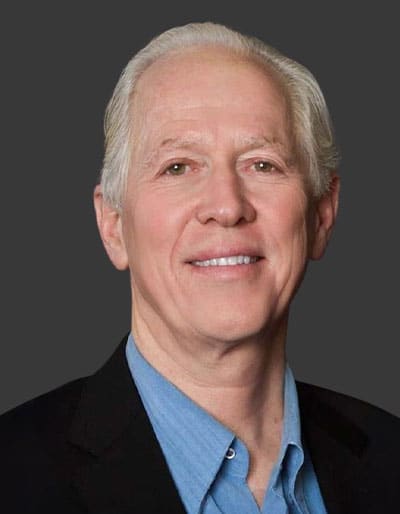
Masculine nasal proportion can be described concretely. In profile, the bridge runs straight from the root of the nose to the tip, or carries a very slight convexity, rather than the scooped curve that reads as feminine. The tip sits lower and less rotated; as a general principle, a man's nose is planned toward a nasolabial angle of roughly ninety to ninety-five degrees, where a woman's is rotated further. Tip and bridge stay wider and stronger, in proportion to a larger face and a broader jaw. None of this is a template — a man's nose has to fit his own face, build, and age, and Dr. Nichter plans each one against the face it belongs to.
The failure mode in male rhinoplasty is over-reduction. A dorsum lowered a millimeter past correction, a tip rotated up to look tidy, a bridge narrowed past the width of the brow — each is a small decision, and together they produce the two outcomes men most want to avoid: a nose that looks feminine, and a nose that looks operated. Dr. Nichter's protection against both is restraint. He removes the specific thing that bothers the patient, keeps the framework that supports everything else, and reinforces it where it is weak rather than cutting further to force a shape.
Thicker skin changes the plan underneath it. Male nasal skin, particularly over the tip, carries more subcutaneous and sebaceous tissue and does not shrink-wrap around a delicate framework. Definition has to be built into the cartilage so that it reads through the skin above it, which means adding support rather than removing volume: septal grafts to hold tip projection, sutures that shape rather than resect, and a dorsal profile set slightly higher than it would be under thin skin.
Function is more often part of the conversation with men, because men more often present after an injury. A nose broken years earlier is typically deviated, with a bent septum and one passage blocked ever since. Straightening the outside and opening the airway are one operation: septoplasty, turbinate reduction, or valve repair through the same incisions as the cosmetic work. Male nasal bones are thicker and heavier, one reason controlled osteotomies and graft support matter more here than the size of the change.
The nose is also judged against the chin. A chin that sits behind the profile makes any nose look larger than it is, so Dr. Nichter assesses the profile as a whole and will often raise chin augmentation at the same consultation — a pairing that achieves more balance than either procedure alone. Where the upper face has aged alongside the nose, he may also discuss eyelid surgery or a male facelift.
Is it right for you
Am I a Good Candidate for Male Rhinoplasty?
The men who do best with rhinoplasty can name the thing they want changed and are prepared for a healing timeline measured in months. Age is rarely a limit once the face has finished growing; men in their fifties and sixties have rhinoplasty for the same reasons men in their twenties do, and often for breathing as much as appearance.
Male rhinoplasty may be right for you if:
- A dorsal hump dominates your profile and you want it lowered, with the line kept straight
- Your nose was broken and healed crooked or with a visible step in the bridge
- One or both nasal passages have never breathed well, at night or during exercise
- Your nose reads as too wide, too long, or too heavy for your face
- The tip has dropped with age and lengthens the profile
- A previous rhinoplasty left the bridge scooped or the tip over-rotated
- You are in good overall health and do not smoke, or are willing to stop before surgery
Men who want a nose substantially smaller than their facial proportions will carry are better served by a frank conversation than by surgery, and Dr. Nichter will say so. He will also tell you when the change you describe is smaller than you think — many men expect a reduction and leave with a plan centered on straightening the nose and opening the airway.
What to expect
Your Rhinoplasty Experience
Consultation and Planning
Dr. Nichter examines the nose outside and in, assessing the bony and cartilaginous framework, the thickness and oiliness of the skin, the position of the septum, and how the airway behaves when you breathe in. He also reads the nose against your brow, chin, and jaw, which set the proportions it has to match.
The aesthetic conversation is specific: how much of the hump to take, how much dorsal height to leave, where the tip should sit, how wide the bridge should stay. If breathing is part of the picture, he explains what septoplasty or valve repair adds to the operation and the recovery. Men planning around work travel or a season of training should raise it here, since it affects timing.
The Day of Your Procedure
Male rhinoplasty is typically performed under general anesthesia and takes one and a half to three hours, longer when a deviated nose is straightened or grafts harvested.
Most male cases are done through an open approach — a small incision across the columella, the strip of skin between the nostrils, plus incisions inside each nostril. Lifting the skin allows the framework to be seen directly, which matters under thick skin, where small differences in the cartilage are what the eye eventually reads. For a nose needing little more than a hump lowered, a closed approach may be appropriate.
The dorsum is lowered conservatively and the bridge narrowed with controlled osteotomies — precise bone cuts that let the nasal bones be repositioned. The tip is shaped with sutures and, where support is needed, with cartilage grafts from the septum, ear, or rib. Rotation is set deliberately low. Where a nose is deviated after an old injury, the septum is straightened as the structural spine of the correction, and any obstruction addressed at the same time with turbinate reduction or valve repair.
A splint is taped over the bridge at the end of the operation to protect and hold the new shape.
Immediately After
You are monitored while the anesthesia clears and go home the same day. Internal splints or packing, if used, come out within a day or two. The external splint stays on about a week. Expect a blocked nose, swelling, and bruising under the eyes, more noticeable when bone work has been done. Someone will need to drive you home and stay with you for the first twenty-four hours.
Recovery
Recovery and Downtime
The visible part of rhinoplasty recovery is short — a week of splint, a fortnight of fading bruises. The invisible part is long, and longer in men, because thicker skin holds swelling for months after the shape underneath has settled.
The First Few Days
The nose feels blocked and congested, and most men describe the sensation as pressure rather than pain, managed with prescribed medication for a few days. Sleep propped up, avoid blowing your nose, sneeze with your mouth open, and keep your head above your heart. Bruising under the eyes appears within a day and peaks around day two or three.
Week One
The splint and any columellar sutures come off around day seven, and the nose emerges swollen but recognizably straighter. Bruising is fading by then. Shaving around the base of the nose and the upper lip resumes once Dr. Nichter clears it, and beard growth screens the columellar incision well. This is the week most patients arrange to be out of the office or working from home.
Weeks Two Through Six
Most men are back at work within two weeks, and by then the nose reads as normal to anyone who was not told. Glasses cannot rest on the bridge while the bones consolidate — tape them to the forehead or plan for contact lenses. Walking and light cardio resume around week three to four with Dr. Nichter's clearance; heavy lifting and anything risking impact to the face wait longer. Contact sports return last, well beyond six weeks.
Three to Eighteen Months
By three months most of the swelling has gone and the bridge is settled. What remains sits in the tip and just above it, and this is where thick male skin makes itself felt: definition arrives gradually over the following year. Men are commonly counselled to judge the final result between twelve and eighteen months, rather than the twelve quoted more generally. The change is subtle, and it is the difference between a nose that looks good and one that looks like it was always there.
Results
Straight, strong, permanent.
The first honest look comes when the splint is removed at a week, and it is incomplete — the bridge is straight, the hump gone, the tip still swollen and sitting higher than it finally will. By three months the profile is essentially set. The tip refines through the first year and, in men with thicker skin, into the second.
What the operation changes is permanent. Bone that has been repositioned stays where it was set, and cartilage that has been reshaped and supported holds its form. The face keeps aging around it, as every face does, but the straightened bridge, the corrected deviation, and the improved airway are lasting. Men who had septoplasty usually notice the breathing difference within the first few weeks, and it is the change they mention first.
The standard a man usually sets is that nobody should be able to name what changed. A male rhinoplasty done well reads as a straighter profile on the same face — something looks better, and no one can say what.
This patient underwent a Rhinoplasty procedure in order to improve the appearance of the nose and/or the ability to breathe through the nose. The operation, therefore, may be considered cosmetic, functional, or for some patients both.
This patient underwent a nose surgery in order to improve the appearance of the nose and/or the ability to breathe through the nose. The operation, therefore, may be considered cosmetic, functional, or for some patients both.
This patient underwent a nose surgery in order to improve the appearance of the nose and/or the ability to breathe through the nose. The operation, therefore, may be considered cosmetic, functional, or for some patients both.
Investment
Cost and Financing
The cost of male rhinoplasty depends on the complexity of the case — primary or revision, open or closed, straightforward reshaping or the reconstruction of a nose deviated by an old injury — along with anesthesia, cartilage grafting, and whether functional work is included.
Functional correction is worth raising early. Where breathing is obstructed by a deviated septum, collapsed internal valves, or enlarged turbinates, that portion may be partially covered by insurance — more often relevant for men because of prior nasal trauma. Dr. Nichter's office can help determine whether your case qualifies and what documentation the carrier wants.
A detailed, transparent quote for the cosmetic component is provided after consultation.
Financing options are available — please ask at your consultation.
Common questions
Frequently Asked Questions
How is male rhinoplasty different from rhinoplasty in women?
The aesthetic target differs, and so does the tissue. A masculine plan keeps the bridge straight or very slightly convex, sets the tip lower and less rotated, and leaves tip and bridge wider in proportion to a larger face. Male skin is thicker, bone and cartilage heavier, swelling slower to resolve. The steps carry the same names as in a woman's rhinoplasty; the judgments about how far to take each one differ.
Will my nose end up looking feminine?
That outcome comes from over-reduction — a dorsum taken too low, leaving a scooped profile, and a tip rotated too far upward. Both are decisions made in the operating room, and both are avoided by planning conservative targets and keeping the framework intact. Dr. Nichter sets the dorsal line and tip rotation toward the masculine end of the range and reinforces the cartilage holding them there.
Does thicker skin change what is achievable?
It changes how definition is created and how long it takes to appear. Thick skin does not drape tightly over a reduced framework, so refinement comes from shaping and supporting the cartilage until its contours read through the skin. Tip definition is subtler than under thin skin and emerges over a longer period. Dr. Nichter assesses skin thickness at consultation and tells you what it means for your result beforehand.
My nose was broken years ago. Can that be corrected now?
Yes. An old fracture that healed crooked can be re-broken in a controlled way and reset, with the septum straightened at the same time. The two go together, because a nose deviated on the outside almost always has a deviated septum inside. There is no time limit — noses broken in high school are commonly straightened decades later.
How much time will I need away from work?
The splint is on for about a week, and that week is the hard part to be discreet about. Most men return to work at one to two weeks, once the splint is off and the bruising has faded; desk work from home is often possible sooner. Heavy lifting and contact sports wait longer, and glasses cannot rest on the bridge for several weeks.
Will rhinoplasty improve my breathing?
Where the obstruction is structural — a deviated septum, enlarged turbinates, or collapse of the internal nasal valve — septoplasty or valve repair during the same operation can significantly improve airflow. Men who have lived with one blocked side since an injury often report this as the most noticeable change of all. Where the cause is allergic, medical management addresses the congestion.
Should I consider a chin implant at the same time?
It is worth assessing. The nose and chin are read together in profile, and a chin that sits back makes the nose look larger than it is. Adding projection to the chin can achieve part of what a patient assumed would come from reducing the nose. Chin augmentation is commonly performed in the same operation, and Dr. Nichter will tell you if the profile would be better served by both.
Can a previous rhinoplasty that went too far be corrected?
Often, yes. Revision in men usually means restoring what was removed — rebuilding dorsal height and tip support with cartilage grafts to bring a scooped or over-refined nose back toward masculine proportions. It is harder than a first operation and may require cartilage from the ear or rib when the septum has already been used. Dr. Nichter evaluates revision cases individually and gives an honest assessment before proposing surgery.
Schedule Your Consultation
If your nose has bothered you for years, or has never breathed properly since an injury, a consultation is a practical place to start. Dr. Nichter will examine the framework and the airway, tell you what a masculine result for your face would look like, and set out what the recovery asks of your schedule.
Request a Private ConsultationDr. Nichter sees patients from across the United States and internationally. The office is located in Newport Beach, CA.