Deep Plane Facelift vs. LiteLift®—which is right for you? Discover the key differences, recovery times, and results of today’s most advanced facelift options.
Facelifts have come a long way in recent years. Patients are no longer limited to a single surgical option—techniques have advanced, recovery times are shorter, and results are more natural. Two of the most requested facelift techniques are the Deep Plane Facelift and the LiteLift®, each offering unique benefits.
If you’re considering facial rejuvenation, here’s a side-by-side look at these procedures to help you decide which approach best suits your needs.
What Is a Deep Plane Facelift?
The Deep Plane Facelift is a surgical technique that repositions the deeper layers of facial tissue, below the facial muscles to reposition the deeper structures and overlying skin and subcutaneous tissues. This technique was popularized originally by Sam Hamra decades ago and has undergone renewed popularity due to refinements in techniques. Key Benefits:
Best for patients with advanced facial aging and significant sagging
Produces long-lasting results
Improves midface, nasolabial folds, jowls, and neck
Considerations:
Longer surgery and recovery time compared to less invasive options
Typically requires 3-4 weeks of downtime
Higher risk of facial nerve injury (e.g. asymmetric smile)
Higher upfront cost due to surgical complexity
What Is the LiteLift®?
The LiteLift® is a minimally invasive facelift developed as a shorter, less intensive procedure. Using a smaller incision and a quicker surgical approach with about 40% less tell tale scaring yet similar long-lasting results in Dr. Nichter’s hands..The LiteLift® repositions and tightens the SMAS, a fine fascial layer overlying the muscles that supports them and the overlying skin and soft tissue allowing rejuvenation of both layers. Because this is above the facial nerves there is less chance of an injury to these key structures.
Key Benefits:
Less invasive than a Deep Plane Facelift
Shorter recovery (about 2-3 weeks)
Ideal for most patients in good health regardless of their age and degree of soft tissue laxity
Leaves smaller, more hidden scars with natural results
Considerations:
Results typically last 7–10+ years
May not fully address more advanced sagging or neck issues
2025 Trends: Why Patients Choose One Over the Other
Lifestyle Fit: Many patients are choosing LiteLift® because they want a refreshed look, less tell tale scars without taking extended time off from work or social life.
Technology Enhancements: The LiteLift® and Deep Plane Facelifts are often combined with complementary procedures like a neck, eyelid, and/or brow lift and fat transfer or non-surgical treatments like lasers, and/or chemical peels to enhance results.
Which Procedure Is Right for You?
Ultimately, the choice depends on your age, anatomy, lifestyle, and goals. A consultation with a board-certified plastic surgeon is the best way to determine which facelift option is right for you.
Both the Deep Plane Facelift and LiteLift® are highly effective procedures in skilled hands, each designed for different patient needs. Facelift techniques can be fully personalized for your desired outcome. Perhaps most important is selecting the most qualified plastic surgeon as far more important than the technique is the plastic surgeons mastery of his craft. Great surgeons tend to get great results even though they may favor a different technique to get there. Do your homework to find the most competent and experienced surgeon.
Facial rejuvenation procedures have witnessed remarkable advancements over the years, offering individuals a spectrum of options to address signs of aging and enhance facial aesthetics. Among these options, the deep plane facelift, and some short scar SMAS techniques such as the LiteLift stand out as long-lasting techniques. Both procedures aim to restore youthfulness and vitality to the face, yet they differ in their approach, depth of tissue manipulation, and outcomes. Below is a comparison between the deep plane facelift and LiteLift, exploring their techniques, benefits, limitations, and considerations for patients seeking facial rejuvenation.
Deep Plane Facelift: Technique and Outcomes
The deep plane facelift is a surgical procedure designed to address moderate to severe facial aging by repositioning deeper layers of facial tissues, including the SMAS (superficial musculoaponeurotic system). Unlike traditional facelifts, which primarily tighten superficial layers, the deep plane technique offers a significant rejuvenation by releasing and repositioning the underlying facial structures. This is not a new technique and was first proposed by Sam Hamra in 1990.
The procedure involves making incisions along the hairline and around the ears, through which the surgeon accesses the deeper layers of the face below the SMAS. By dissecting between the SMAS and deeper facial muscles, the surgeon can lift and reposition the facial soft tissues more resulting in rejuvenation of the midface, jawline, and neck.
By addressing deeper layers of tissue, this technique can produce significant improvements in facial contour and definition, while minimizing the risk of a “pulled” or overdone appearance. Moreover, the longevity of results is often cited as a key benefit, with many patients enjoying the effects of their deep plane facelift for years to come.
However, the deep plane facelift is a far more invasive procedure compared to less extensive techniques, such as the LiteLift. The surgery typically requires general anesthesia and entails a longer recovery period, during which patients may experience more swelling, bruising, and discomfort. Additionally, because of its deeper dissection, there is the potential higher risk of complications such as nerve injury or hematoma, although these risks are generally low when performed by a skilled surgeon.
LiteLift: Minimal Invasive Approach with Rapid Recovery
In contrast to the deep plane facelift, the LiteLift is a minimally invasive procedure that targets mild to moderate signs of aging in the lower face and neck. Similar to a MACS lift (Minimal Access Cranial Suspension Lift), and S-lift, the LiteLift involves smaller incisions and less extensive tissue undrmining compared to traditional facelift techniques.
During a LiteLift procedure, the surgeon makes small incisions around the ears or in the natural creases of the face, through which excess skin is removed, and underlying SMAS tissues are tightened without dissecting deep to it as done with a Deep Plane technique. While the LiteLift does not involve the same depth of dissection as the deep plane facelift, it still produces similar improvements in facial laxity and contour, particularly in the jawline, jowls, and upper neck.
One of the primary advantages of the LiteLift is its minimal downtime and quicker recovery compared to more extensive facelift procedures and can be done in the office under local anesthesia or in a surgery center under general anesthesia or IV sedation. For example, the incisional scar is hidden behind the earlobe crease so that a woman can wear her hair in a pony tail or cut short without tell-tale signs of surgery. The smaller incisions used in the LiteLift result in minimal scarring, which can be particularly appealing to patients concerned about visible surgical scars. Because the surgery is less invasive, patients typically experience less postoperative swelling and discomfort, allowing them to return to their normal activities sooner.
However, the LiteLift may not be suitable for individuals with more significant signs of aging or laxity in the deeper facial tissues, such as a large “Turkey Waddle” redundant neck skin. Fortunately, it can provide effective rejuvenation for most patients. Together with ancillary procedures such as a scarless neck lift (MyEllevate procedure) if needed will give maximum results with less invasive surgical techniques.
Considerations for Patients: Choosing the Right Procedure
When considering facial rejuvenation options, patients should weigh the benefits and limitations of each technique in consultation with a board-certified plastic surgeon. Factors such as the extent of facial aging, individual anatomy, and personal preferences will influence the choice between a deep plane facelift and LiteLift. Make sure you select a surgeon with the most experience, great reviews and perhaps most importantly one you have the maximum trust with following the consultation.
Ultimately, the decision between these two techniques should be based on a thorough understanding of the patient’s goals, anatomy, and the expertise of the surgeon performing the procedure. By carefully considering these factors, individuals can make informed choices to achieve their desired facial rejuvenation outcomes.
Conclusion
Facial rejuvenation is a dynamic field offering a range of options to address signs of aging and enhance facial aesthetics. The deep plane facelift and LiteLift represent two distinct approaches to facial rejuvenation, each with its own set of benefits and considerations. The LiteLift is a newer procedure that gives similar results but is less invasive.
Both techniques can produce significant improvements in facial contour and definition, tailored to the individual needs and preferences of the patient. Ultimately, the choice between a deep plane facelift and LiteLift should be made in consultation with a qualified plastic surgeon, taking into account the patient’s unique anatomy, goals, and tolerance for downtime. By partnering with a skilled surgeon and understanding the nuances of each technique, patients can achieve natural-looking results and restore youthfulness to their appearance.
The following is an interview between Dr. Larry Nichter, MD, FACS and RealSelf about ultrasonic cavitation, a painless, FDA-approved fat reduction procedure.
How long does it take to see results from ultrasonic cavitation?
Following ultrasonic cavitation assisted liposuction with devices like Liposonix or VASER, normal post-operative edema and swelling tends to be slightly more in my experience during the first 3 days and takes a little bit longer to resolve, however the results are often better than liposuction alone due to skin contraction. It is also very usefult for body sculpting. External ultrasonic fat reduction (e.g. Ultrashape Plus) is painless, and results in significant but less dramatic fat reduction than liposuction. The results can take weeks to months to be seen and usually are part of a series of treatments.
How long do results last?
If your weight is stable, your results will be long lasting – many years to lifetime. I like the analogy: if you had an identical twin and only you were treated you would always look better your entire life. However, please note that hormonal, age and other factors are also associated with increased fat.
How much does ultrasonic cavitation cost?
This is dependent on the experience of the surgeon, geographical location, number of areas treated, if it is performed in the doctors office vs outpatient center, vs hospital, type of anesthesia — local vs IV vs general anesthesia, and finally on the overall operative time.
Does ultrasonic cavitation tighten skin?
Ultrasonic cavitation assisted liposuction can tighten the skin by creating heat which leads to skin contraction. External ultrasonic cavitation (e.g. Ultrashape) focuses its energy.
Does it destroy fat cells?
Yes, this process is called lipolysis. Fat cells are both destroyed as ultrasonic waves cause cavitation which is rapid oscillating sound pressure waves that create microbubbles that can selectively damage the fat cell membrane.
What are the side effects and complications of cavitation?
For ultrasonic cavitation assisted liposuction- side effects include initial swelling may be more significant, and Incisions are slightly larger. Complications include: there is a potential risk of localized thermal burns in addition to the usual risks of liposuction such as seroma (collection of fluid). Side effects from external liposuction cavitation are few and far between and there is essentially no recovery time.
I thought it helpful to list a few things that came to mind to help protect and prevent you from being a victim of this pandemic. This will be a challenge as it is expected to infect 40-70% of our population. I am sure you also have other suggestions I missed. Please share them. These suggestions are ones I am adopting and/or recommending to patients, my staff, family members and friends. Based on emerging data, they may need to be changed but most are common sense suggestions based on my personal knowledge base. They apply to healthy households where no one is ill. See below links for other related issues and advice. The CDC, WHO, and others are great websites for detailed information and recommendations.
Stay home as much as possible unless exercising, or activities away from others. Simply put stay away from other people. If a family unit, keep it that way; “alone together”. Clean surfaces with soap and water, then with usual cleaning sprays as needed especially if anyone has symptoms. Include high touch surfaces are just about everywhere especially kitchen, bathroom, door handles, phones, shared keyboards, etc. When outside stay 6 ft or more away from others. If you develop symptoms wear a mask if you have one, isolate yourself and use extra precautions (see CDC link below). Stay away from those at the highest risk to protect them.
Plan ahead: For those with increased risk factors (and others) consider ordering most items you will need including food on line. Many items will be on backorder, but in many cases, you can order now even though it will be delivered days or weeks from now. Stay ahead of your needs by ordering at regular intervals.
If you live alone or are the only adult in your home – figure out what you will do if you are ill. Find a COVID-buddy to share this burden. Do not wait until you fall ill. Remember most likely at least 50% of the population will be affected with COVID-19
Keep Strict procedure to keep your household safe: Hand Sanitizer in cars and immediately inside by the entrance doors. AS soon as you enter disinfect your hands. Hand washing probably more effective than sanitizer. All items in a sealed bag dip can be dipped in highly diluted but effective bleach solution (1/3 cup or 5 Tablespoons per one gallon of water or 4 teaspoons or 20 cc per quart. Betadine, Iodine, solution can be used but just soap and water should be effective. Clean flat working surfaces often. An alternative is washing the surface with soap and water or a disinfectant wipe. Wash hands after, before/after meals, touching pets, touching nose, mouth especially after sneezing/coughing.
Obtain extended supplies – enough for a few weeks if possible. Buy more food and essentials for daily living than usually needed without hoarding, much can be stored in the freezer for later use to minimize the number of trips outside the home. Use Amazon or other home delivery services – though they may be “currently out of stock”, they usually give you an estimate of when it will be available – e.g. a week from now. Order in advance at regular intervals. Wash all packaging that comes into your home or wipe off as needed. Note that freezing will NOT kill COVID 19, just the opposite, it may allow it to be infective for far longer periods. On the other hand, cooking will. I prefer frozen veggies preferred over fresh during this time, as fewer hands have probably touched it. Frozen vegetables are usually frozen immediately after picking so always fresh and can be stored so you do not have eat it immediately or leave the house often. For those unable to wash your fruits and vegetables easily, I would limit eating salads and other non-peeled, fruit. Wash everything thoroughly, and/or consider other methods (see CDC references) and consider discarding outer most leaves. I am personally favoring cooked veggies instead. Perfect time to stock up on dried beans and grains – crockpot, Instapot or pressure cooker makes this no longer a time-intensive activity. Note, food appears not to be a major vector for COVID thus far.
Young people are not immune: The notion that young people are immune is a myth: and yes, young adults can become very ill. In the USA 20% of hospitalizations of first 4000 confirmed cases of Covid-19 were among those in the 20–40 year age group. For needed road trips and business trips: Try not stop for fast food as it increases the chance of interacting with others, is handled by at least 2 others, etc – bring food with you if feasible. Do NOT shake hands, keep a safe social distance. If you are bringing fast food home, consider microwaving it before consuming.
Stay Healthy: Exercise daily using social distancing, sleep adequately (something I hope to be able finally do ), Vitamin C, and D, home projects, etc.. Do fun things, read a book, catch up on Netflix, and your TO DO list, connect with friends by phone, text, conference calls and social media. Call someone who is isolated and let them know you were thinking about them.
Stay safe, stay healthy. Our family, friends, the world…. are being threatened. Do not take this lightly.
Flattening the curve of COVID-19. Toby Morris at Spinoff.co.nz (CC BY-SA 4.0)
Mission Plasticos is helping
On a separate note I wanted to let you know what Mission Plasticos is doing: We are mobilizing potentially needed and potentially lifesaving medical items in our Plasticos warehouse to be able to donate as needed in for community emergency needs which are expected in the days to come. e.g. we have 2 anesthesia machines, suction machines, OR equipment, surgical tools, disposables and PPE’s, etc. For more information see: www.missionplasticos.org
How you can help: Hospitals need help and will shortly have a critical need for additional doctors, nurses, medical assistants, surgical techs and non-medical support. For those without increased risk factors (e.g. under 60 years of age without co-morbid conditions) weigh the dangers vs benefits and consider contacting hospitals and urgent care centers for short time hire or volunteer work. Volunteer individually for a neighbor, friend, or with an organization that takes care of the elderly, those with disabilities, socially isolated – to assist with living essentials like food shopping, picking up meds, etc.
Blood will be critically needed by hospitals. Consider donating blood if you are healthy without risk factors for donors or recipients. This also applies to those that, are fully recovered from COVID-19 and given permission from your physician (your serum may be even more helpful to those critically ill). Donate unneeded blankets and clothes for the increasing homeless population and refugee centers. Remember their health may affect yours.
Please stay safe. Our family, friends, coworkers and staff are the only truly valuable asset we have. We desperately need to protect them. Remember both your actions and non-actions will affect others.
These are just some of the items I thought of that might be helpful to you: Let’s share other safety practical tips not mentioned. We are all in this together, let’s “bend the curve”.
Larry Nichter, MD, MS, FACS, FAAP Pacific Center for Plastic surgery and BioSpa Medical Spa Newport Beach, CA 92660 949 720 3888
Dr. Larry Nichter (center) and the Plasticos team pack up medical supplies for Cuba.
Ten years ago, the Mission Plasticos completed its first missions to Cuba. Led by Dr. Larry Nichter, the team of surgeons, anesthesiologists, and nurses made life-changing reconstructive surgery possible for children with burns and deformities.
In the intervening decade, politics kept Plasticos from returning to Cienfuegos, on the southern coast of the island nation. But that has changed. With the U.S. and Cuba opening up relations, the Plasticos team were able to book a return to the Hospital Pediátrico Universitario — the same hospital where they performed transformative surgeries for children years ago.
Dr. Larry Nichter again heads the team. On their 2016 trip, the team will include: “two other plastic surgeons, a general surgeon, a pediatrician, three anesthesiologists, five nurses, trip organizers and, for the first time, an orthodontist.” The team anticipate performing scores of surgeries, including some very complicated ones.
Plasticos, on all their missions, makes a point of sharing technical information with their hosts while performing surgeries so that these same types of surgeries can continue even after the team has left. Dr. Nichter and his team will share the latest reconstructive technical advances including burn repair, flap surgeries, and breast reconstruction after mastectomy so that these procedures will always be available to the people of Cienfuegos and surrounding communities.
Mission Plasticos will also leave medical equipment, including an autoclave sterilizing machine and operating theater lights, in Cuba as a gift to the hospital.
This is Dr. Nichter’s 70th volunteer surgical mission, the vast majority in the past 15 years with the Mission Plasticos, of which he is co-founder and president.
Natural feel is not the only thing women care about. The FDA approved intact silicone gel implants as safe. However, if a gel implant ruptures the implant and any gel should be removed including the surrounding capsule (capsulectomy). IDEAL® IMPLANT offers women natural feel without the risk of silent rupture. Women value the advantages of IDEAL® IMPLANT over silicone gel:
Dr. Nichter’s tummy tuck patient, Michelle 45 years old, shares her story with the American Society of Plastic Surgeons (ASPS) about her plastic surgery journey.
Hitting newsstands today and Monday is an interesting article featuring Dr. Nichter and his patient, written by Joel Stein for Time Magazine, discussing the evolution of cosmetic surgery and it’s undeniable relevance in today’s world. The article titled “Nip. Tuck. Or Else” points out how thanks in part to social media we are now on the red carpet 24/7 posting pictures of ourselves on Facebook, Instagram, SnapChat, Vine, and more, so it’s imperative to look our best at all times. The social media frenzy is one reason why there has been a spike in the number of non-invasive procedures performed on the younger demographic. It can certainly be said that no longer are cosmetic procedures just for the aging population.
Here is the full article – Nip. Tuck. Or Else.”
by Joel Stein
You’re going to have to do it. And not all that long from now. Probably not a full-on, general-anesthesia bone shaving or muscle slicing.
But almost definitely some injections into your face. Very likely a session of fat melting in some areas and then possibly moving it to some other parts that could use plumping. Not because you hate yourself, fear aging or are vain. You’re going to get a cosmetic procedure for the same reason you wear makeup: because every other woman is.
No, it’s not fair that–in 2015, with a woman leading the race for the Democratic nomination for President–in addition to dieting, coloring your hair, applying makeup and working out, you now have to let some doctor push syringes in your cheeks just to look presentable. It’s not fair that you have to put your surgery on your credit card just so the other moms on the playground don’t overestimate your age. It’s not fair that you may risk your life going under general anesthesia just to keep up.
Then again, maybe it’s not fair that some women are born straight-nosed and full-breasted. That some people don’t have trouble staying thin. That workers with above-average looks will make $230,000 more over their lifetime than people who are in the aesthetic bottom seventh, as a study by University of Texas economics professor Daniel Hamermesh found. Maybe it doesn’t feel fair that a man is writing about this, even if more and more males are starting to feel the same kind of pressure that women have dealt with for decades.
“It’s becoming harder and harder to say no without being read as irrational or crazy,” says Abigail Brooks, the director of women’s studies at Providence College, who recently completed research comparing women who undergo antiaging interventions and those whom she calls “natural agers.” The former group described the latter using phrases like “let herself go” and “not taking good care of herself.” Brooks worries that that pressure is not only exhausting but also keeps women forever 21 emotionally. Continue reading “Dr. Larry Nichter featured in Time Magazine’s Article “Nip. Tuck. Or Else.””→
Dr. Larry Nichter explains how fat transfers can have the double benefit of reducing fat in unwanted areas and adding volume in desirable areas such as the buttocks.
 The following is an interview between





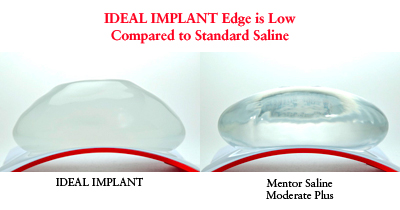 Natural feel is not the only thing women care about. The FDA approved intact silicone gel implants as safe. However, if a gel implant ruptures the implant and any gel should be removed including the surrounding capsule (capsulectomy). IDEAL® IMPLANT offers women natural feel without the risk of silent rupture. Women value the advantages of IDEAL® IMPLANT over silicone gel:

